How Symbols Changed the World
From Ancient Symbols to the Written World
Writing is one of the most important developments in human history. Long before people communicated through books, phones, computers, and social media, humans used spoken language, pictures, symbols, and other forms of communication to share information. As societies became larger and more organized, people needed a way to record information that could last over time.
This digital exhibition explores how early writing systems developed and how writing changed human civilization. Visitors will learn about communication before formal writing, the development of Mesopotamian cuneiform, Egyptian hieroglyphics, and the connection between writing and power.
Writing allowed people to record laws, trade, government information, religious beliefs, and other important parts of their lives. It also made it possible for information to be preserved and passed from one generation to another.
As you explore the exhibition, think about this question:
How would your life be different if humans had never developed writing?
Before Writing
Before formal writing systems existed, humans still had many ways of communicating. People used spoken language, memory, drawings, symbols, and objects to share information and record important ideas. Cave paintings and other visual representations show that humans were communicating through images long before organized writing systems developed.
Early symbols could represent animals, people, objects, or events. People also developed methods for keeping track of things such as goods and resources. As communities became larger and trade and government became more complicated, remembering everything became more difficult.
This created a need for more permanent ways to record information. Instead of depending only on memory or spoken communication, people could use marks and symbols to keep records. These early forms of communication helped create the foundation for later writing systems.
The development of writing did not happen all at once. Different civilizations developed different systems for recording language and information. Mesopotamia and Egypt became two important places in the early history of writing.

Early humans used images and symbols to communicate ideas before formal writing systems developed.
Why It Matters
The important thing to understand is that writing developed because people had growing amounts of information that needed to be remembered and recorded. Writing eventually allowed information to survive beyond the people who originally created it.
Think About It
What information would be difficult to preserve if humans could only communicate through speech and memory?

Cuneiform: One of the Earliest Writing Systems
One of the earliest known writing systems developed in ancient Mesopotamia. Cuneiform began in what is now Iraq around the late fourth millennium BCE. It was first used for record-keeping and later became a way to record many different types of information.
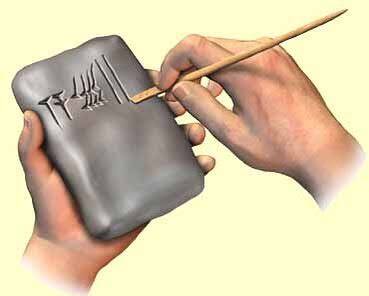
The word “cuneiform” comes from a Latin word meaning “wedge-shaped.” The name describes the marks made when a reed stylus was pressed into wet clay. The marks created distinctive wedge-shaped signs.
Cuneiform was especially useful because clay tablets could preserve information. Early records included information about goods, rations, trade, and other activities. As the system developed, it was used for much more than accounting. Cuneiform was eventually used for laws, literature, government records, religious texts, and other forms of communication. The British Museum explains that cuneiform was used continuously for more than 3,000 years.
Cuneiform was not a language by itself. It was a writing system that was used to write different languages, including Sumerian and Akkadian. Scribes learned the complicated system through training, and writing became an important skill in ancient societies.
Primary Source: Cuneiform Tablets
Cuneiform tablets are important primary sources because they are actual objects created by people in ancient Mesopotamia. Some tablets recorded everyday information such as accounting and business activities. Looking at these tablets helps historians understand how ancient societies organized information.
Analysis: These tablets show that writing was not only used for stories or religion. It was also connected to everyday life. People needed writing to keep track of resources, trade, and other activities. This shows how writing helped increasingly complex societies organize information.
Why Cuneiform Matters
Cuneiform changed the way information could be stored and shared. Instead of information disappearing when a person died or forgot it, written records could remain for future generations. This helped create a historical record of ancient societies.

Egyptian Hieroglyphics
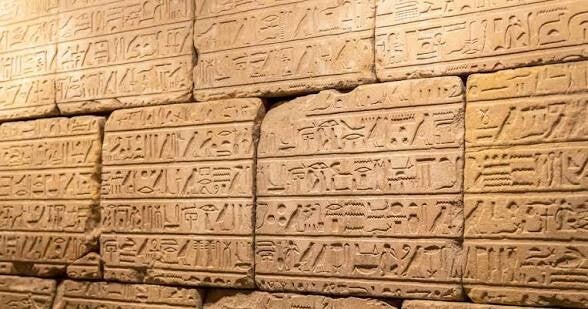
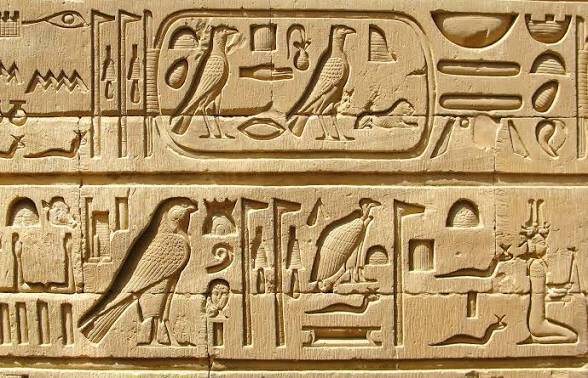
Ancient Egypt developed its own writing system known as hieroglyphics. Hieroglyphic writing used signs that could represent sounds, objects, and ideas. Writing became an important part of Egyptian society and was used in religious texts, monuments, tombs, and government activities.
Hieroglyphic inscriptions can be found on monuments and other objects throughout ancient Egypt. These inscriptions give historians information about Egyptian beliefs, rulers, religion, and society. Writing helped ancient Egyptians preserve information about their civilization and communicate ideas across generations.
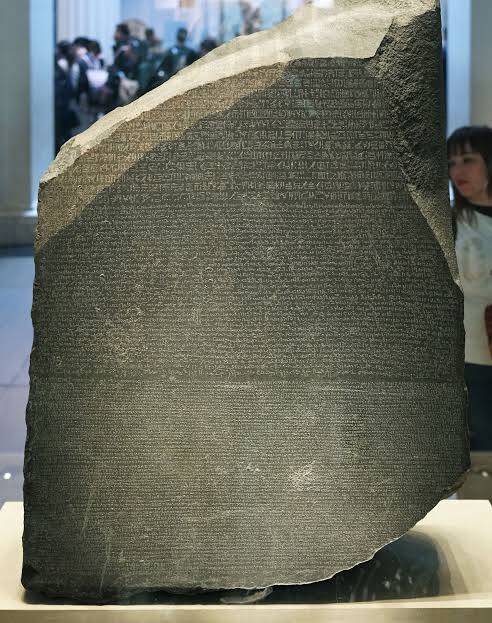
One of the most famous objects connected to Egyptian writing is the Rosetta Stone. The stone contains a decree written in three scripts: hieroglyphic, Demotic, and Ancient Greek. The decree was issued in 196 BCE during the reign of Ptolemy V. Because the same decree appeared in different writing systems, the stone became extremely important in helping scholars understand Egyptian hieroglyphics.
Primary Source: The Rosetta Stone
The Rosetta Stone is a primary source because it is an actual ancient object containing a written decree. The text was created during the Ptolemaic period and was intended to communicate an official message.
Analysis: The Rosetta Stone demonstrates how writing could be used by governments and religious leaders to communicate official information. Its three scripts also show that different writing systems could exist within the same society. Later, the stone helped scholars decipher Egyptian hieroglyphics and learn more about ancient Egypt.
Why It Matters
Egyptian hieroglyphics show that writing was more than a way to record basic information. It could also preserve religious beliefs, honor rulers, decorate monuments, and communicate important messages. The survival of these inscriptions gives historians a way to study ancient Egyptian civilization today.
Writing and Power
As writing developed, it became an important tool for governments and rulers. Written records allowed governments to organize information, record transactions, establish rules, and communicate decisions. Writing could therefore become connected to power.
One important example is the Code of Hammurabi from ancient Babylon. The Code of Hammurabi is written on a large stone monument and contains 282 legal judgments dealing with areas such as family, property, trade, and labor. It was created around 1750 BCE during the reign of Hammurabi, king of Babylon.